
Search
INCARDINATED: Father Francis Makwinja finds spiritual anchor in diocese
-
 January 22, 2026By RENEE WEBB
Content and Design Coordinator
After serving in the Diocese of Sioux City as a missionary priest since 2011, Father Francis Makwinja was officially incardinated into this diocese earlier this month.
In a Decree of Incardination made effective by Bishop John E. Keehner on Jan. 15, the bishop stated, “Having considered that Reverend Makwinja, will be useful for the ministry of the Diocese of Sioux City for the good of the Church and the good of the souls, I, the undersigned Ordinary, by means of this Decree, hereby incardinate the Reverend Francis S. Makwinja as a Priest of the Diocese of Sioux City, in accord with the norms of canons 265, 267, and 269 of the Code of Canon Law.”
Ordained a priest on July 12, 1997, he previously a priest of the Diocese of Dedza located in central Malawi, Africa. He served as a parochial vicar before furthering his education in Kenya and teaching in a minor seminary.
Spiritual anchor
“I look at this incardination as some kind of spiritual anchoring,” said Father Makwinja, who is parochial vicar at St. Mary Parish in Humboldt and Holy Trinity Parish of Webster County. “I have served in the diocese, prayed with the people and walked with them through joys and sorrows. I felt like I was ministering to the people in the diocese but now I have become a part of it.”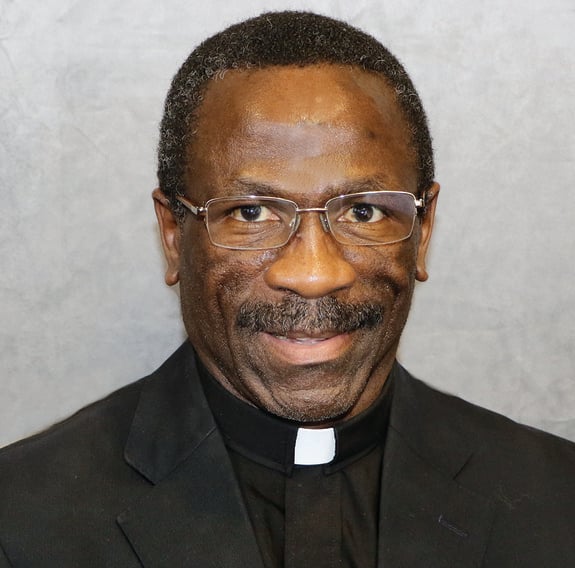 Father Francis Makwinja
The incardination has brought him a deep sense of joy and peace.
“It felt like God whispering, ‘This is where I want you.’ I also felt a sense of gratitude for the trust Bishop John Keehner has placed in me, and I am grateful to God for giving me a ‘new’ spiritual home,” he said.
Father Makwinja ended up in Iowa through his affiliation with Opus Spiritus Sancti. While serving in Africa, Father Makwinja had joined Opus Spiritus Sancti that has five communities – one of which is a secular institute for diocesan priests.
It just happens that Father Tom Flanagan, a priest of the Diocese of Sioux City who previously served as director of that religious community, had witnessed Father Makwinja’s final dedication to that community. Within a couple weeks, a request from this diocese came in for a member of Opus Spiritus Santi to serve in the Diocese of Sioux City. The African bishop asked Father Makwinja to go.
“I never actually considered becoming a missionary to the United States, but I guess it was not totally out of the question because when I was growing up, most of the parishes back home had missionary priests from Europe, Canada and America,” said Father Makwinja. “I didn’t understand how they found themselves there but the idea of ministering in that manner seemed like what priesthood was all about.”
Temporary becomes long-term
When he took the assignment in the Diocese of Sioux City in 2011, he thought it would be temporary and even his African bishop noted it would be three to five years, subject to extension. Over time, his bishop said he could continue to minister in this diocese as long as it was agreeable with the bishop here, which at the time was Bishop Walker Nickless.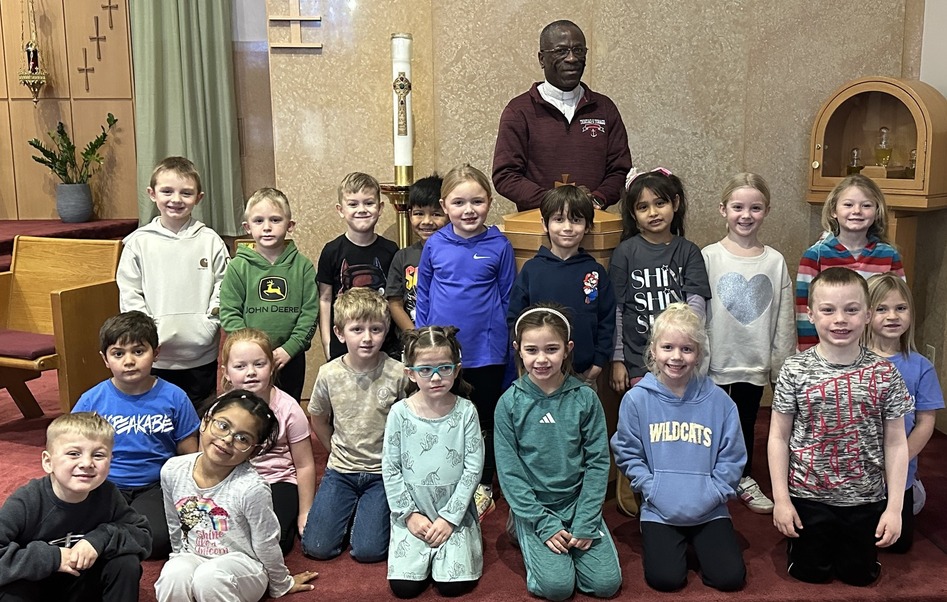 Father Makwinja poses with the kindergarten class at St. Mary School in Humboldt after teaching them a lesson about the baptism of the Lord.Coming to Iowa, he noted, there were many differences. The infrastructure such as buildings and roads felt big and fast. Even community life was different as people here appeared to be more private.
“The weather was another big change. I got here in the fall and even the nice fall weather was strange to me. I was particularly amazed by the fact that one could feel cold while the sun was shining brightly,” said Father Makwinja. “Then came snow. As I experienced these changes, I came to realize that God brought me here for a purpose and I remember saying a prayer for courage and wisdom from time to time.”
Parish life here is also different from Malawi, he noted. There, most people walk long distances to church and stay for long hours not only for Mass but for activities such as choir practice, social gatherings and meetings. The liturgies, which can be two to three hours, are more expressive and use liturgical dance throughout the service.
Most priests, he noted, serve multiple mission churches which are under the care of catechists.
Similarities outweigh differences
Despite differences, Father Makwinja said there are far more similarities in priestly ministry.
“This is because the heart of the faith and the ministry remain the same, even when the cultural expression varies. I remember in 2017 when my mom came over to visit,” he said, noting that she accompanied him for all of the weekday and weekend Masses. Other than the language difference, “she enjoyed it because those similarities helped her blend in and feel at home in the church community.”
After arriving for service in the Diocese of Sioux City, Father Makwinja initially served as parochial vicar at St. Joseph in Milford where Father Flanagan was serving as pastor. He has also served at Sioux Rapids St. Joseph, Laurens Sacred Heart, Royal St. Louis, Larchwood St. Mary and Rock Rapids Holy Name as well as chaplaincy at Holy Spirit Retirement Home in Sioux City and Briar Cliff University.
When the pastoral ministry plan Ministry 2025 was unveiled, he thought continued service here may make a difference.
At that time, he began to pray about it. Father Makwinja approached Bishop Keehner about becoming incardinated in the diocese and the bishop was agreeable. With the approval of the Bishop of Dedza, the process was initiated and five months later Father Makwinja is an official priest of the Diocese of Sioux City.
“I wanted to be incardinated because I felt drawn to the pastoral rhythm of the diocese, its needs, its culture and its hopes,” said Father Makwinja. “As I prayed, I felt a call to root myself more deeply and to serve with long-term commitment.”
HOME
Cover photo: Father Francis Makwinja blesses a dog during a pet blessing service held for the Feast of St. Francis.