
Search
BCU Franciscan Values program explores immigration history, current crisis
-
 February 13, 2026By DAWN PROSSER
Director of Communications
The inaugural Briar Cliff University (BCU) Franciscan Values Lecture Series tackled a difficult and often controversial topic – immigration. On Feb. 9, students, faculty and community members gathered to learn more about the historical context of immigration in the United States, Catholic social teaching and the local church’s response.
Dr. Brian Peterson, BCU provost, opened the evening and noted that the United States “is a nation of immigrants,” and in modern times has seen large numbers of immigrants.
“Now we find ourselves in the midst of a crisis - the deaths of Alex Pretti and Renee Good, mass deportations, protests and civil unrest, political polarization and social division,” he said, admitting that immigration is a very complex issue. “To be clear, tonight’s discussion is not political, it’s not about right and left, conservative or liberal. This is educational.”
Program speakers included Dr. Michael Horka, BCU campus minister; Deacon Mark Prosser, Bishop John Keehner’s chief of staff and chancellor; Revathi Vongsiprasom, immigration attorney with Welcome of Catholic Charities; and Norma Garza-Ramirez, case manager for Welcome.
Welcome provides professional immigration law services, case management and mental health care to anyone in northwest Iowa. It was created in 2023 in response to the immigration legal needs in this area, through a partnership of the diocese, Catholic Charities and Siouxland Immigration Law.
‘The right way’
Each speaker agreed with Peterson that immigration is a complex topic with no easy answers. Deacon Prosser said regarding undocumented immigrants, he often fields the question, “Why don’t they just do it legally?”
“A good number of them have done it legally, but they’re unable to sustain the legal journey because of cost, complexity and a variety of other reasons,” he said.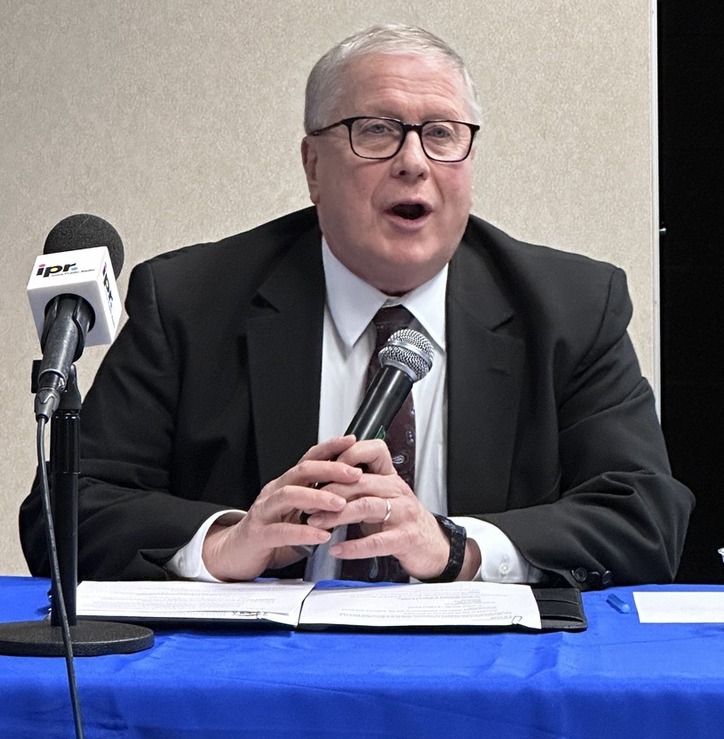 Deacon Prosser “What is the ‘right way?’ Does anyone here know? …the reality is nobody knows,” Vongsiprasom stressed. “So, you want to talk about doing something the right way, but the right way doesn’t exist.”
Deacon Prosser pointed out that even as far back as the Ronald Reagan administration, advocates have been trying to “explain to our elected officials of all party affiliations” that immigration reform is badly needed.
“We’ve seen that incrementally amongst a variety of administrations, and we’re seeing it now, a huge budget with increases for border security, for border enforcement, for immigration enforcement,” he said. “But we see nothing or virtually nothing for the administrative side on the need for immigration judges, caseworkers, courtrooms and so on.”
The deacon said this lack of equity of resources keeps people from applying for the green card or any number of visas they may need, or even to have time in court “to argue their case.” The immigration attorney pointed out that there are some cases where citizens are trying to bring siblings to the U.S. and the courts are still processing applications from 2001.
Noting the Catholic Church’s response to the current immigration crisis, Horka shared the November 2025 relatively rare special message from the United States Conference of Catholic Bishops (USCCB), voicing concerns about rhetoric, mass deportations, tactics of Immigration and Customs Enforcement and other immigration issues.
“Catholic social teaching tells us we are one human family, whatever our national, racial, ethnic, economic and ideological differences,” Horka said.
Horka added that Bishop John Keehner of the Diocese of Sioux City recently penned a letter to the faithful echoing the concerns of the U.S. bishops regarding the dignity of the human person and the need for comprehensive immigration reform.
How did we get here?
Horka provided numerous historical insights and data on U.S. immigration history “so we can have a better understanding of the present.”
The campus minister walked the audience through the colonial period of immigration prior to 1820 through the contemporary period, from 1965 to present day. Prior to the 1800s, the immigrants from northern and western Europe made up the largest population of immigrants.
The speaker pointed out that the United States’ victory in the Mexican-American War in the 1840s had a long-lasting effect on immigration as all or part of 10 states were added to U.S. territory including the annexation of Texas.
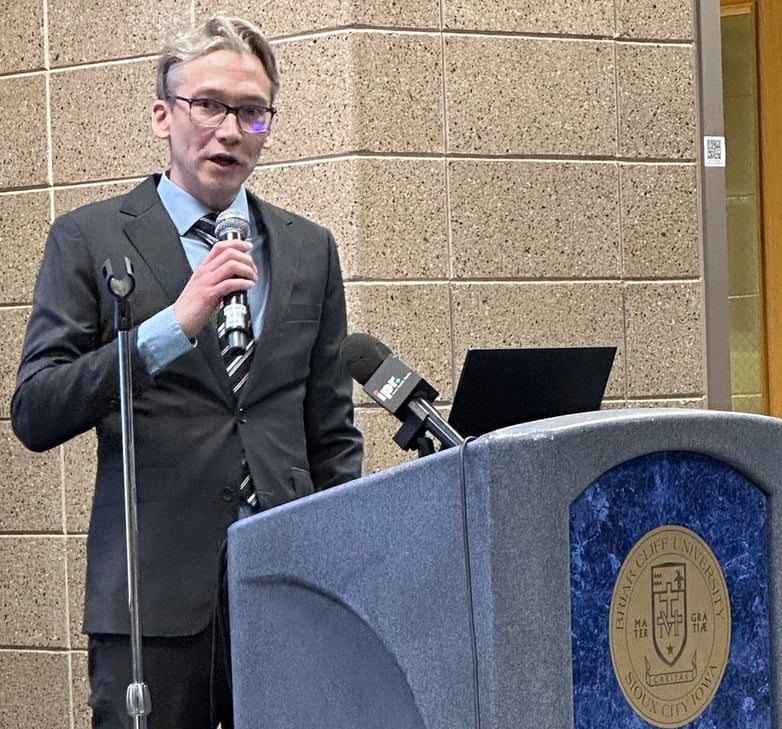 Dr. Michael Horka“In effect, for many living in the west and southwest of what is today the United States, the border crossed them. Those who had been Mexicans were now under the jurisdiction of the American government,” Horka said.
He added that a law was passed prior to the war stating that “free white persons could naturalize,” or become citizens and that under the law, the former Mexican citizens in that territory “were considered white under the law.” Although they were eligible to become citizens, many did not as their families had lived in that territory for generations and didn’t feel the need to go through the process.
In the Second Great Wave of immigration starting in the 1880s, immigrants from southern and eastern Europe were coming to the U.S. to escape poverty and political oppression and find jobs. The majority of Americans at that time were from northern and western Europe and there was an anti-immigrant sentiment towards the newcomers.
Laws were passed in 1921 and 1924 that “almost completely restricted immigration from south and east Europe,” Horka said.
Following the depression and World War II, Mexican immigration grew under the Bracero program that brought a “legal form” to the pattern of Mexicans provided migratory labor in California and Texas.
The Immigration Act of 1965 signed by President Lyndon Johnson ended a national origins quota system and replaced it with a national cap. In the 1970s, President Gerald Ford limited the number of Mexican immigrants into the country.
The advent of the North American Free Trade Agreement (NAFTA) provided advantages to the United States and also affected immigration.
“NAFTA would bring manufacturing jobs to Mexico but also decimate the small farming industry in Mexico. This meant more people on the move from agricultural rural areas to Mexican cities and eventually north of the border,” Horka said.
 In the 1980s, the U.S. was investing heavily in border enforcement with labor and technology and the immigration reform and control act was passed.
“But the demand for labor was too high and oversight of employers was lax so all these people were hired and the undocumented population grew,” the campus minister explained.
The 1996 Illegal Immigration Reform and Immigration Responsibility Act was signed by President Bill Clinton which was designed to decrease the number of undocumented workers but it had the opposite effect.
“Before the 1990s, undocumented immigration looked very different. It was usually temporary. People would go back and forth as the threat of deportation was low. Aspects of the 1996 law made legal pathways nearly impossible to obtain,” he said, adding the law called for removing immigrants from the country for three to 10 years before allowing them to return.
Horka pointed out that people would not want to be separated from family members or leave a job, so they chose to stay as the laws “incentivized people to stay in the U.S. undocumented. Before 1996, there were 5 million undocumented, now that’s double.”
As deterrent laws became more harsh, there were more reasons for undocumented immigrants to stay in the U.S., he said as it became more difficult to move between countries.
“Notably, more than 97% of the 6.4 million migrants removed from the U.S. from 2000 to 2020 were returned to Latin American countries,” he said.
The speaker added that during President Barack Obama’s administration, there were record numbers of deportations – “more than every previous presidential administration combined.”
He stated that many of the actions of the U.S. over the years regarding immigration have led to the current immigration situation.
“We’ve had a hardening border. People are staying undocumented. Many industries are thrilled to have the labor of migrants,” he said. “And there’s been a lack of comprehensive immigration reform, really since the 1960s.”
Immigration in Iowa
Deacon Prosser explained that diversity in Iowa began in the 1970s when Governor Robert Ray initiated a refugee relocation program for southeast Asians.
“That really brought a first wave to a state that was otherwise, and it still is, pretty white,” he said.
Since that time, communities in the diocese including Denison, Sioux City, Storm Lake, Sioux Center and others have attracted immigrants from many nations for employment.
“You would find that groupings and clusters of diverse populations and growing populations, primarily around the ag industry, business, food processing and so on,” he said. “The need for immigrant labor by corporations and companies was the drawing card for many of the communities.”
The deacon served as police chief and later public safety director in Storm Lake from 1989 to 2020 and had to figure out how to navigate the fast-growing diversity.
Some communities in northwest Iowa that only spoke English 40 years ago now have over 30 languages spoken. The deacon pointed out that in addition to law enforcement staff, healthcare workers, educators and others in these communities have had to learn how to work in multilingual environments with a variety of cultural differences.
“We can look at statistics and we can look at those who oppose immigration, those who support immigration and we lose in the cracks the stories of the individual families and the individual people who come here and grow our communities and enrich our communities,” he said.
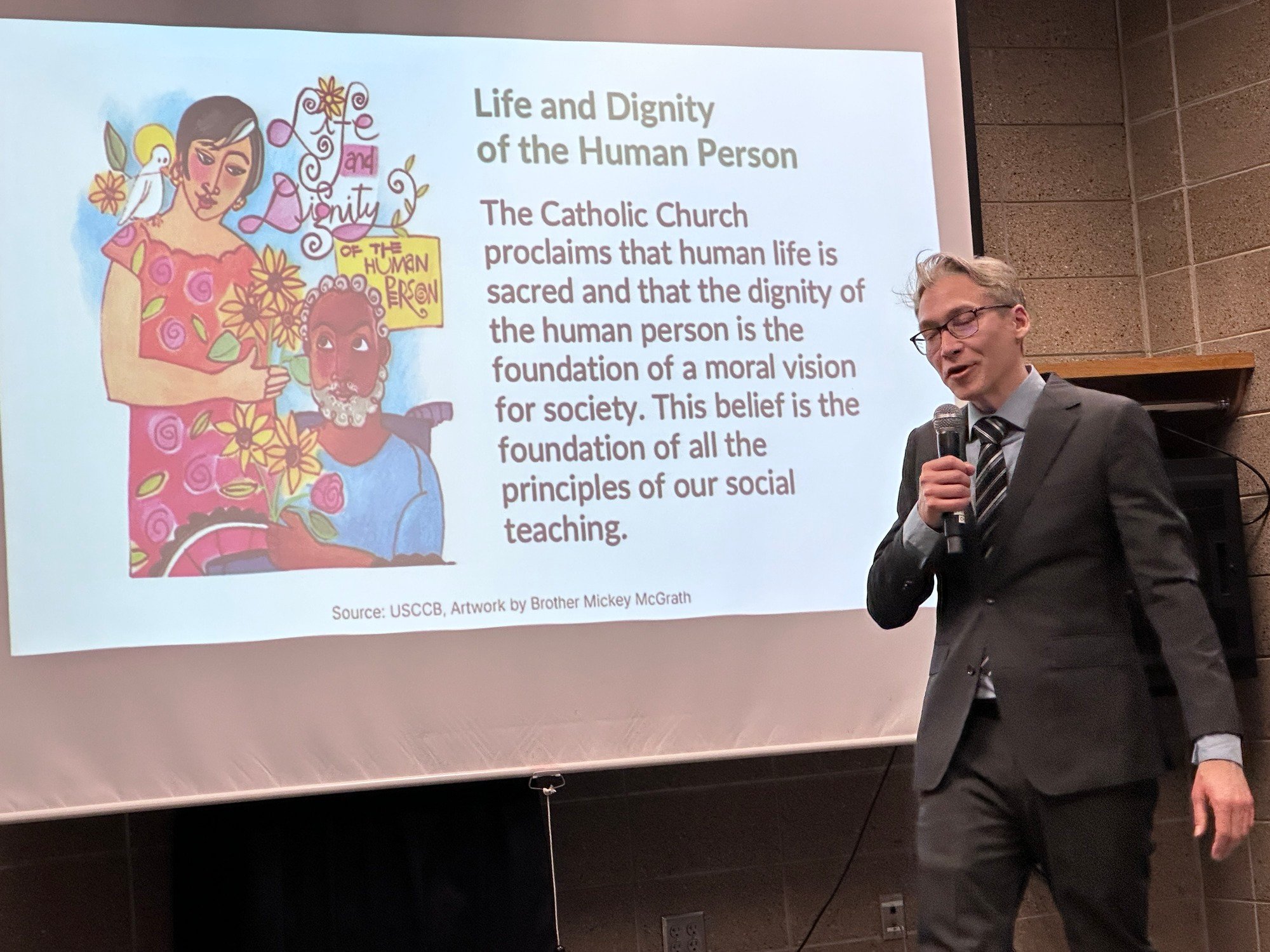 The church's teaching on the dignity of the human person were discussed.The Welcome team works with those individuals and families experiencing hardships in their immigration cases and often the accompanying hardships. The staff assists immigrants with tasks such as replacing lost or stolen immigration documents, applying for visas and citizenship.
Vongsiprasom pointed out Welcome often connects clients with mental health care for individuals “who have survived extreme physical abuse of every nature you can think of.”
Garza-Ramirez said in the current immigration climate, many of their clients are declaring they do not feel safe and made the difficult decision to return to their home countries but they are not certain how to do so.
“I encourage our callers and our clients to sit down and create a safety plan, to learn about ‘know your rights,’ because document or not, we all have rights,” the case manager said.
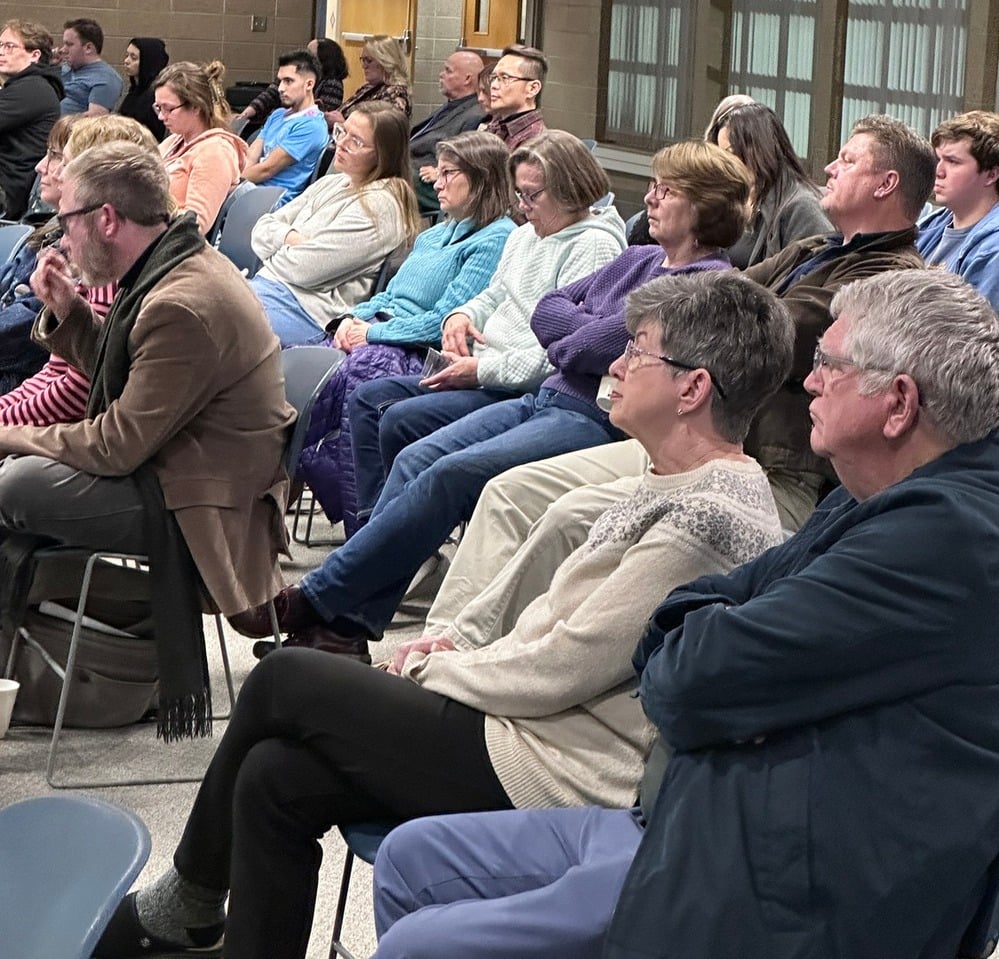
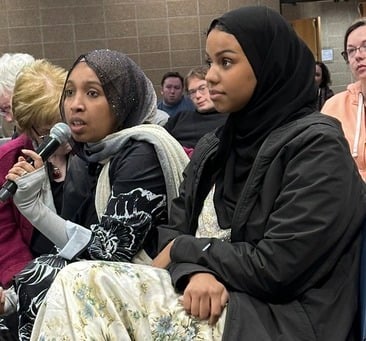 Attendees asked questions.All agree the current system isn’t working due to a variety of factors, and it’s important to find equitable solutions, for the sake of the immigrants and U.S. citizens. The deacon anticipates the country will soon realize the economic need for immigrants.
“There’s plenty of non-partisan studies out there that show if we don’t fix our immigration laws and reform – in a good way - that in 10 years, the United States will not have the labor force – because of birth and death rates – that are required to sustain our industries and production. And that’s going to impact the economy,” he said. “And then we are going to understand just how important our immigrant populations and brothers and sisters are.”
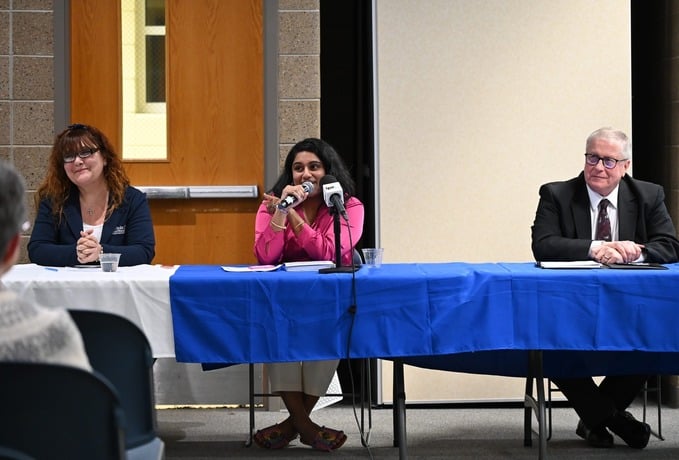
Cover photo: Welcome immigration attorney Revathi Vongsiprasom, center, addresses the audience. She is pictured with Norma Garza-Ramirez of Welcome and Deacon Mark Prosser of the Diocese of Sioux City. (Photo courtesy of Briar Cliff University. All other photos are from Lumen Media.)
HOME