
Search
'A place at the table' - Bishop's homily following immigration pastoral reflection
-
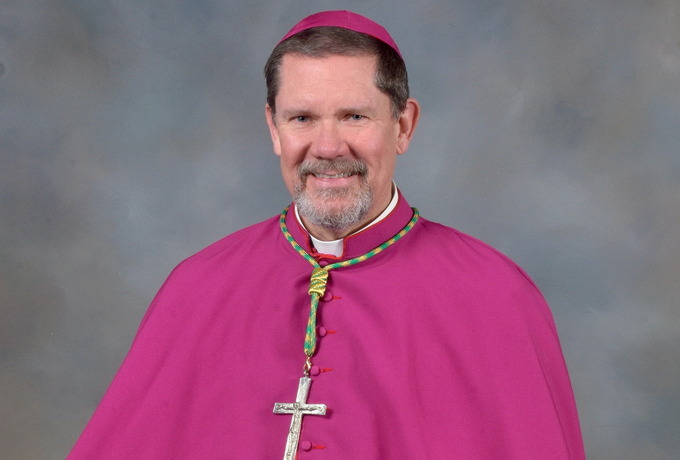 August 27, 2025Bishop John Keehner’s homily for the 21st Sunday in Ordinary Time 2025
An important part of my childhood was our annual family reunion. Every year, on the third Sunday of July, my father’s family would gather for a picnic.
And every year followed the same pattern — we knew which of our aunts would bring potato salad or a certain casserole. We knew which cousin would eat too much and get sick, which uncle would start an argument over politics or religion, which aunt would insist on bringing ice cream which, by the time we were ready to eat it, would have melted into warm puddles.
We were admittedly an odd group. But no matter how different we were, there was always room at the table for all of us. And no matter who might be missing, his or her absence was strongly felt. It is only in looking back that I can recognize tensions and heartaches which I was much too young to grasp, but which were nonetheless a part of who we were as a family.
And now that my extended family is so much smaller and most of my own generation, myself included, has moved away from our hometown and the older generations are gone, I am filled with a longing which is hard to describe—a longing to gather my family together once again, warts and all, to recapture something of what it meant for the table to be big enough for everyone, so that no matter what problems we had with one another, there was always room for one more.
In many ways, today’s readings describe a great family reunion. Isaiah describes the gathering of every nation—a gathering so vast that even those from distant coastlands will come. This gathering will bring together strangers as well as brothers and sisters as offerings to the Lord. And in Luke’s Gospel, in response to the question, “Will only a few be saved?” Jesus also describes a similar gathering, in which people from east and west, north and south, will recline together at the Table in the Kingdom of God.
The question is: How do we assure ourselves a place at the table? How can we be sure that we will be invited? But at the same time in which we worry if we will be invited, and if there will be room for us, how often do we find ourselves expecting, perhaps even hoping, that there will not be room for someone else?
How often do we find ourselves hoping, even unconsciously, that those who have somehow hurt us or ignored us will be left standing on the outside, knocking, trying to get in, while we ourselves are reclining at the table, enjoying a great feast?
If we think about it too much, this Gospel passage can be confusing. On the one hand, Jesus talks about the narrow door, implying that only a few will enjoy the banquet, while at the same time describing a banquet table big enough for everyone who will come from the four corners of the earth, implying that everyone is invited.
And throughout the Gospels, Jesus continually invites people to the banquet, forgiving sins, healing their wounds, inviting them to put aside prejudice and move beyond their fears.
Throughout the Gospels he tells them not to be afraid. He reminds his listeners that it is not necessarily their virtue that matters so much as the realization of their need for God and their dependence upon God for everything.
Perhaps he is telling us that if we try to earn a place at the table at the expense of others, as if salvation were a contest, we are lost. We cannot enter the narrow door by pushing others away or by denying them entrance.
Worrying about who will and who will not be saved won’t guarantee us a spot. Accepting God’s invitation is not a matter of pointing out our own holiness, or pointing out someone else’s faults and failures, as if that could guarantee that there will be one more seat for us. It’s a matter, rather, of recognizing how unworthy we are to be invited in the first place, while still accepting the fact that the invitation is very real, and very sincerely offered out of love.
In light of these scripture readings, in which we are invited to live the faith that we profess, we might consider how it is that we view the stranger among us—those who look different from ourselves, those who speak a language different from our own, those who perhaps have to come our nation seeking safety an a home where they can provide for their families.
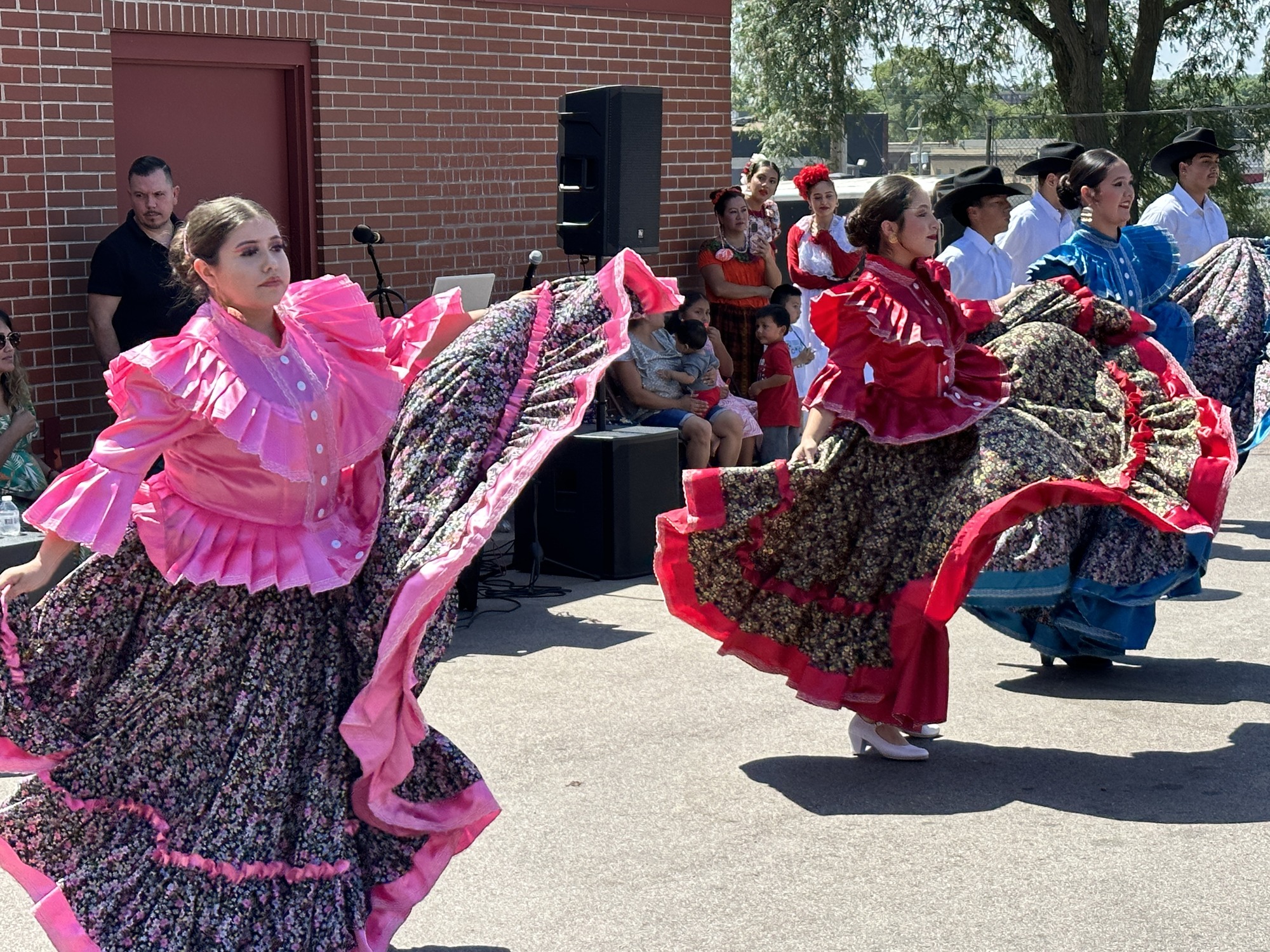 Several diocesan parishes have large percentages of immigrant parishioners including the Cathedral Parish in Sioux City. File photo from a parish festival. Yesterday (this past Friday) the Bishops of the State of Iowa issued a pastoral reflection on the reality of immigration in the hopes that as Christians, we will allow our faith to influence how we live, how we see others and how we treat them, hopefully with the dignity and respect that allows us to recognize Christ in everyone, especially the weakest and the most marginalized among us.
The dining table Jesus describes is big enough for everyone. It’s strong enough to hold enough food for us all. It’s welcoming enough for people to gather for a great reunion from north and south, from east and west.
And if we have the courage to accept that invitation, despite our unworthiness, there we will find ourselves, sitting at the table with persons we may never have expected to see, in the very middle of the strangest group possible—a group that will remind us that in God’s eyes, the last will be first and the first will be last and that, somehow, we all belong.
We are all a part of something bigger than ourselves, part of something which offers us safety and comfort at the same time in which it challenges us to embrace the cross of Jesus as we find it in our own lives, that our lives might proclaim God’s goodness.
God invites us—all of us—to be members of his family. Do we have the courage to accept the invitation? Do we have the courage to recognize that there is room for one more—even for us, sinners though we are—even for those whom we would least expect?
HOME